‘A CITY IS A SYSTEM'
‘A CITY IS A SYSTEM'
Heather Polinsky on the future of Arcadis and Zuidas
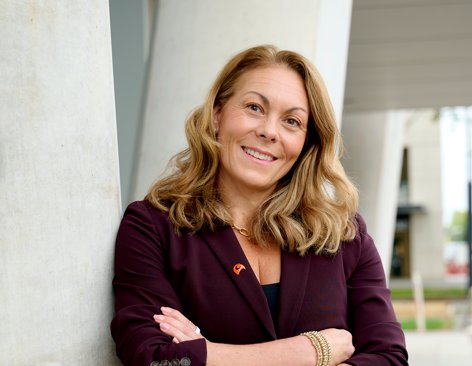
Earlier this year, Heather Polinsky became CEO of Arcadis, the global design, engineering and consultancy firm with its headquarters at Zuidas. After more than two decades at the company and a career spanning several continents, she knows Arcadis from the inside out. Hello Zuidas spoke with her about leadership, the future of cities, the transformation of Zuidas and why imagination, in her view, is essential to turning expertise into impact.
You became CEO of Arcadis this year. How are you experiencing the role so far, and what do you hope to achieve?
“I have spent more than two decades at Arcadis, so this isn’t an organization I’m coming into from the outside. I know the strength of our people and what we are capable of. During my first months as CEO, I’ve spent a lot of time with clients, Arcadians and on project sites across our core markets, as well as with our Foundations and industry peers. I’ve always learned more and made better decisions by being close to the work than by sitting behind a desk. My ambition is to bring greater focus to where we can have the most impact, make it easier to bring the best of Arcadis to our clients and strengthen our performance culture. To me, performance, progress and purpose reinforce each other.”
You have lived and worked in different parts of the world. How has that shaped your leadership style?
“I was born in the Philippines, and my career has taken me across Panama, North America and now Europe. Moving between different cultures teaches you early on that your context is not everybody else’s context. Living and working internationally has made me curious and, I hope, a better listener. I also began my professional life on the client side, with the U.S. Army Environmental Command. That experience taught me the importance of really understanding the problem from the client’s perspective before bringing an answer. Moving from the U.S. to Amsterdam recently has made me the newcomer in a city again, which I like. It keeps that same curiosity alive, and forces you to keep asking questions rather than assuming you already know the answers.”
Arcadis has its global headquarters at Zuidas. How are you enjoying both the new office and the area?
“CubeHouse is special to us because Arcadians helped shape it themselves, bringing expertise in landscape architecture, MEP, structural engineering, building physics and acoustics. It is also the first hybrid-timber office building at Zuidas. It demonstrates that even in a dense and highly constrained urban environment, we can challenge conventional ways of building. I now live in Zuid too, so I experience the area not only as CEO working from our global headquarters, but also as a resident. There aren’t many places where the connection between the work you do and the city around you feels quite so tangible.”
When you look at Zuidas, where do you see the biggest opportunities in the years ahead?
“Zuidas is fascinating because so many of the questions facing future cities are concentrated in one place: mobility, density, housing, energy, climate resilience, public space and economic growth. The opportunity is for Zuidas to continue evolving beyond a business district into a genuinely connected urban neighborhood. Somewhere people come not only to work, but also to live, meet and spend time. These challenges cannot be solved independently. A transport decision affects development; energy affects what and where we can build; climate resilience affects long-term asset value. A city is a system. Addressing that requires imagination and collaboration.”
Arcadis has been involved in Zuidasdok for many years, with your involvement now extending through 2036. What makes the project so special?
“It is remarkable to realize that 25 or 30 years ago, Zuidas as we know it today barely existed. This was the edge of the city, with a motorway and railway line and a few anchors such as the RAI and WTC. In one generation, it has developed into one of Amsterdam’s most important centers. Zuidas grew around its infrastructure, and that infrastructure now runs straight through the district. Zuidasdok is turning what has become a barrier into the heart of the area. Around a kilometer of the A10 will be taken underground, creating new space above it and allowing Amsterdam Zuid station to develop into an international transport hub. We have been involved since 2013 together with Witteveen+Bos and other partners. One of the complexities is effectively doing all of this “with the shop open”: around 150,000 vehicles use this stretch of the A10 every working day, while the road, station and city all need to remain operational.”
What does a project like Zuidasdok tell us about the way cities need to evolve?
“Cities don’t get to stop while we reinvent them. That is one of the defining infrastructure challenges of our time. Across Europe, we need to renew aging infrastructure, respond to climate change and population growth, and introduce new technologies while millions of people continue to depend on those systems every day. That means thinking beyond the immediate engineering solution. Taking transport infrastructure underground, for example, doesn’t just change the road. It creates possibilities for the station, public space and the surrounding city, generating additional economic, social and environmental value.”
Arcadis recently launched ‘Imagination is how’. What does imagination mean to you as CEO?
“Arcadis started here in the Netherlands in 1888, reclaiming and improving land to make it more productive. The challenges have changed enormously, but that instinct to look at a problem and imagine a better possibility has been part of this company for more than 135 years. Imagination is not an alternative to technical expertise; it is what makes expertise more valuable. It allows us to ask different questions, connect capabilities in new ways and identify opportunities that may not initially be obvious. AI makes that even more interesting. Technology can dramatically expand the possibilities we explore, but people bring the context, imagination and professional judgement needed to understand which possibilities truly matter.”
You have also recently set out Arcadis’ strategy for its next phase. What do you want to unlock?
“We already have a strong foundation: deep expertise, trusted client relationships, attractive markets and 34,000 talented Arcadians around the world. Now we want to be more focused in how we bring those strengths together. For clients, I want Arcadis to feel easier to access: strong local relationships and understanding, combined with the ability to connect the right global expertise when it adds value. For our people, that should create more opportunities too. Ultimately, it is about sustained, profitable growth that creates lasting value for our clients, our people and our shareholders.
Finally, what gives you energy outside work and what might surprise people who only know you as CEO?
“My family keeps me grounded: my husband, our twin boys and Bailey, our dog. I was also a competitive swimmer growing up. That taught me a lot about grit: putting in the work repeatedly, pushing through discomfort and understanding that performance comes from what you do consistently. I don’t swim competitively anymore, but I run a lot. I joke that I run until I can’t think anymore. Some of my clearest connections actually happen when I’m moving. Creating physical space also creates mental space, and you often come back to a problem with a different perspective.”
Text: Romy Lange • Photography: Roxanne Wilm